
Why Georgia clay changes the answer
Red clay is the defining soil type across the Piedmont region that covers most of metro Atlanta. It is dense, holds very little air space between particles, and drains slowly compared to sandier or loamier soil found elsewhere. That combination means mulch here has to do more work moderating moisture and preventing compaction than it would on better-draining ground — and the wrong material or depth can trap water against a foundation or root crown for days after a storm.
Every mulch type below can work on clay. The question is which one earns its cost for your specific bed, sun exposure and slope.
Natural Pine Bark
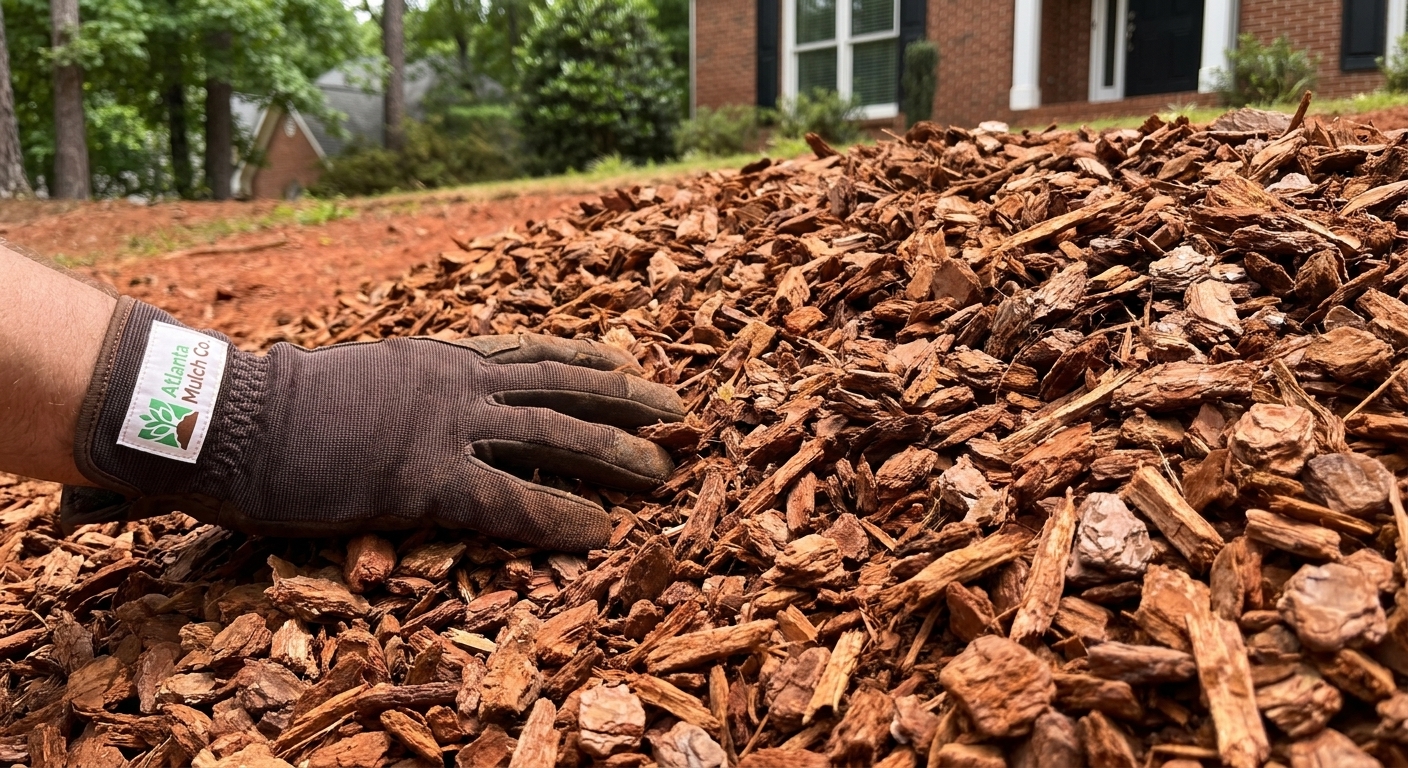
Pine bark, in nugget or mini-nugget form, is our default recommendation for the majority of Atlanta beds and the most common material we install across the metro. Its chunky texture creates natural air gaps that help offset clay's poor drainage rather than compounding it, and it holds position on moderate slopes better than finer, shredded material. It breaks down slowly — typically 9 to 12 months before needing a refresh — and costs less than dyed alternatives.
Best for: foundation beds, moderate slopes, and any bed where you want reliable drainage without paying a color premium. See mulch installation for pricing.
Dyed Hardwood Mulch
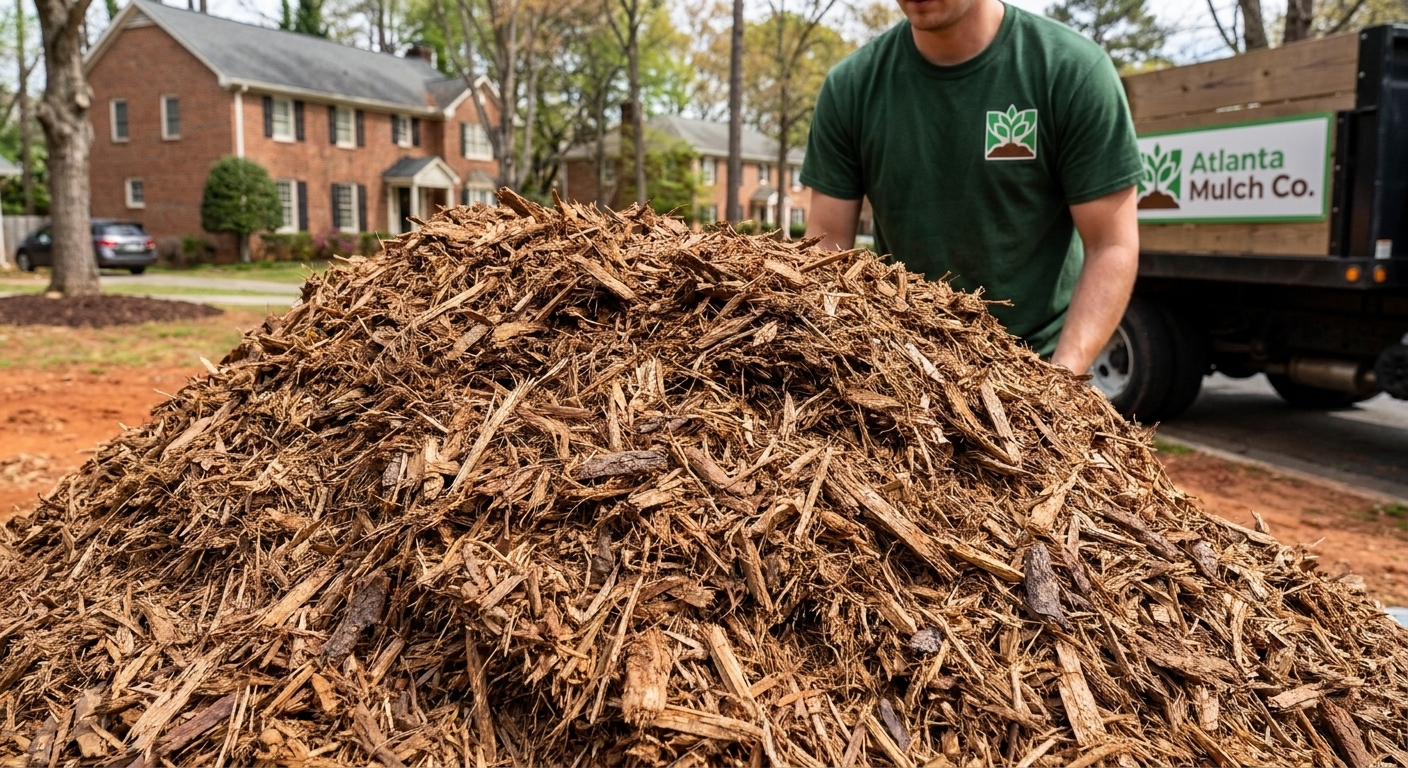
Dyed black, brown or red mulch uses a finer, shredded hardwood base that packs into a denser mat than bark. On clay, that density can actually work against drainage slightly compared to chunkier bark, which is why we pay closer attention to depth on dyed mulch beds — sticking to 2 to 3 inches rather than pushing toward 4. What you get in exchange is a uniform, longer-color-holding finish that natural material cannot match straight out of the pile. See our full dyed versus natural comparison for the color-by-color detail.
Best for: front-entrance beds, HOA common areas and any bed where a finished, uniform look matters more than the lowest cost per yard.
Pine Straw
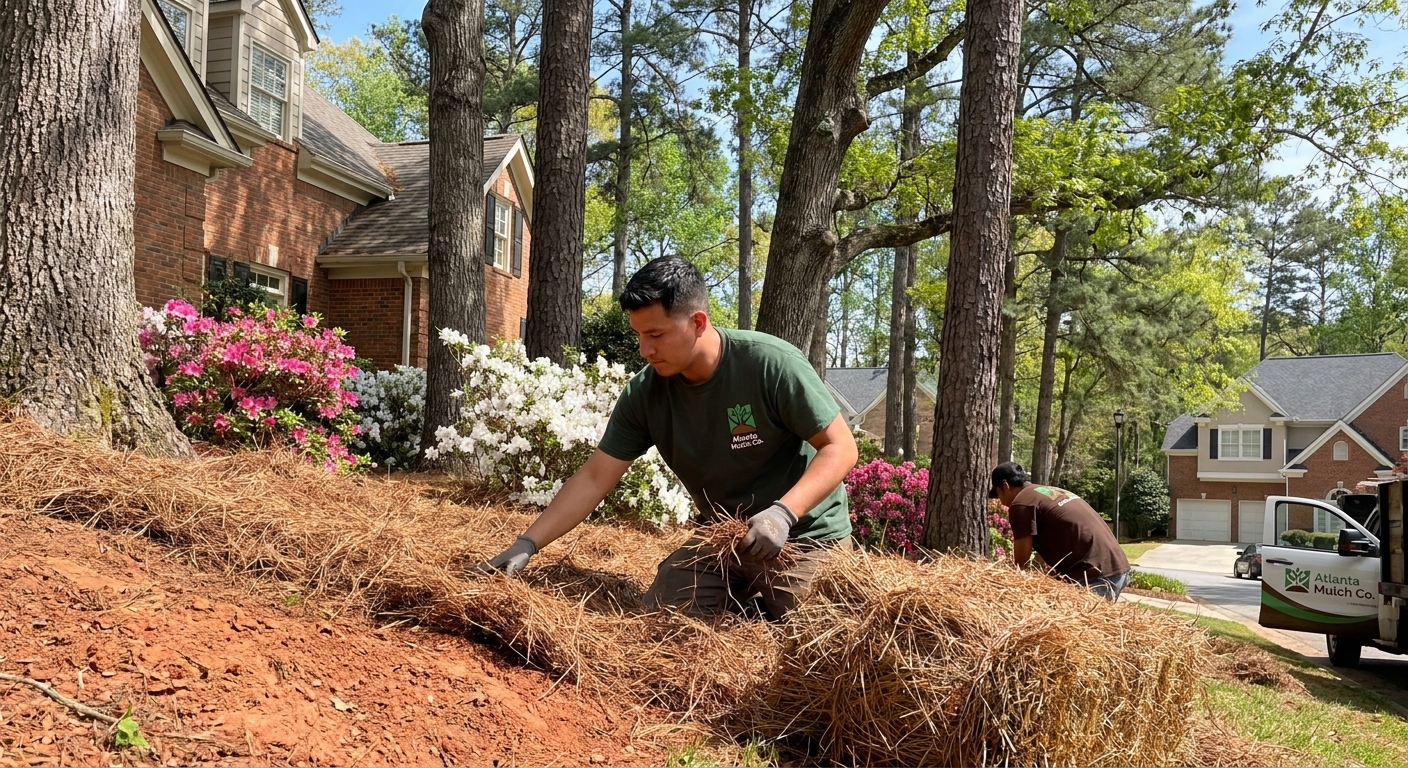
Pine straw is arguably the best-matched material for Georgia clay on sloped ground specifically because its interlocking needle structure resists sliding downhill in heavy rain far better than any loose, chopped material. It is also the right choice under azaleas, camellias and other acid-loving plants common across older Atlanta neighborhoods, since it breaks down into a mildly acidic layer that these plants prefer over the closer-to-neutral breakdown of bark or hardwood. The tradeoff is faster color fade, typically needing a refresh every 2 to 3 months.
Best for: sloped lots, azalea and camellia beds, and large properties where lower per-application labor cost matters more than long color life.
Playground-Grade Engineered Wood Fiber
Certified EWF is a different product entirely from decorative mulch and should never be substituted under play equipment. It is engineered and tested to meet ASTM F1292 impact standards at a specified depth tied to equipment fall-height ratings. See playground mulch installation for depth requirements.
Side-by-side comparison
| Material | Drainage on clay | Color life | Best use |
|---|---|---|---|
| Natural pine bark | Excellent | 9–12 months | General-purpose, slopes |
| Dyed hardwood | Good | 10–14 months | Curb-appeal, front entrances |
| Pine straw | Very good | 2–3 months | Slopes, azaleas, low cost |
| Certified EWF | Good (engineered) | N/A — not decorative | Playgrounds only |
How we choose for your property
We check three things on every estimate before recommending a material: sun exposure (full sun fades dyed color faster), slope (steeper beds favor pine straw or a well-edged bark install), and existing plantings (azaleas and camellias do better under pine straw). See our full mulch installation page for pricing on any of these, or call and describe your bed — we will tell you honestly which material fits before you spend a dime.