
Two good windows, and one you should skip
Metro Atlanta gets two genuinely good mulching windows a year, and one common time people mulch that actually works against them. Understanding why comes down to what mulch is doing for your beds at each point in the growing cycle.
Late spring (mid-April to late May) — the primary window
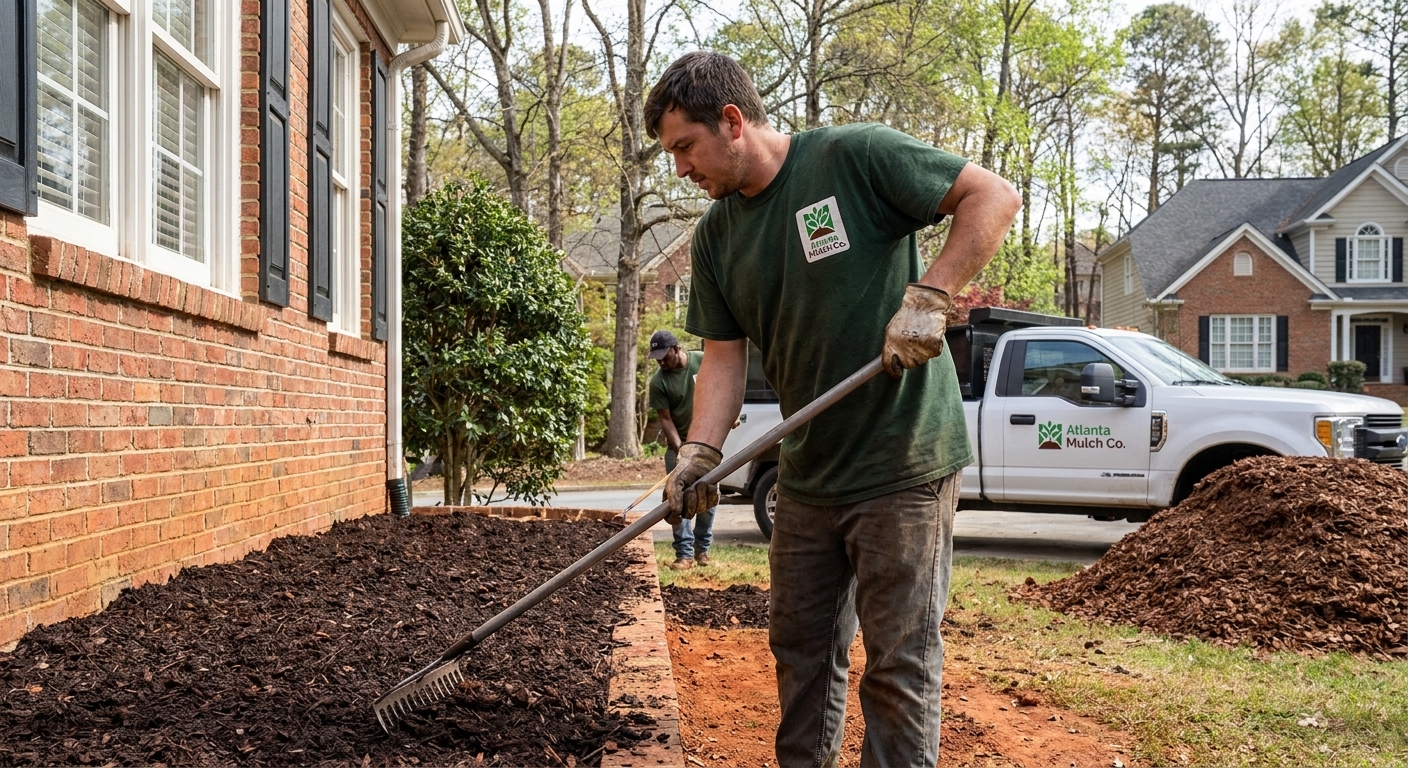
This is the most common and most effective time to mulch in Georgia. By mid-April, the risk of a hard late freeze has mostly passed, soil temperatures are rising, and weed seeds are just starting to germinate — which is exactly when a fresh mulch layer does the most good blocking light and suppressing them before they take hold. Mulching before this window, while soil is still cold from winter, can actually delay soil warming and slow root growth on perennials waking up for the season.
Early fall (late September to October) — the secondary window
A fall mulch application insulates root zones ahead of winter and helps moderate the freeze-thaw cycling that stresses shallow-rooted plants in a Georgia winter, where temperatures can swing from the 40s to a hard freeze and back within the same week. This window matters more for beds with cold-sensitive plantings than for a purely cosmetic refresh, though many properties do a light fall top-off purely for curb appeal ahead of the holidays.
The window to skip: deep summer
Mulching in the middle of a hot, humid Atlanta summer is not wrong exactly, but it is less efficient. Weeds have often already established by July, so mulch is playing catch-up rather than getting ahead of germination. Heat and humidity also accelerate the breakdown of organic mulch, meaning a summer-applied layer needs refreshing sooner than a spring one. If a bed genuinely needs attention in summer — it looks bad, or old mulch has gone moldy — do it anyway rather than waiting, but know it is not the most cost-effective timing if the job can wait a few weeks.
How timing differs by mulch type
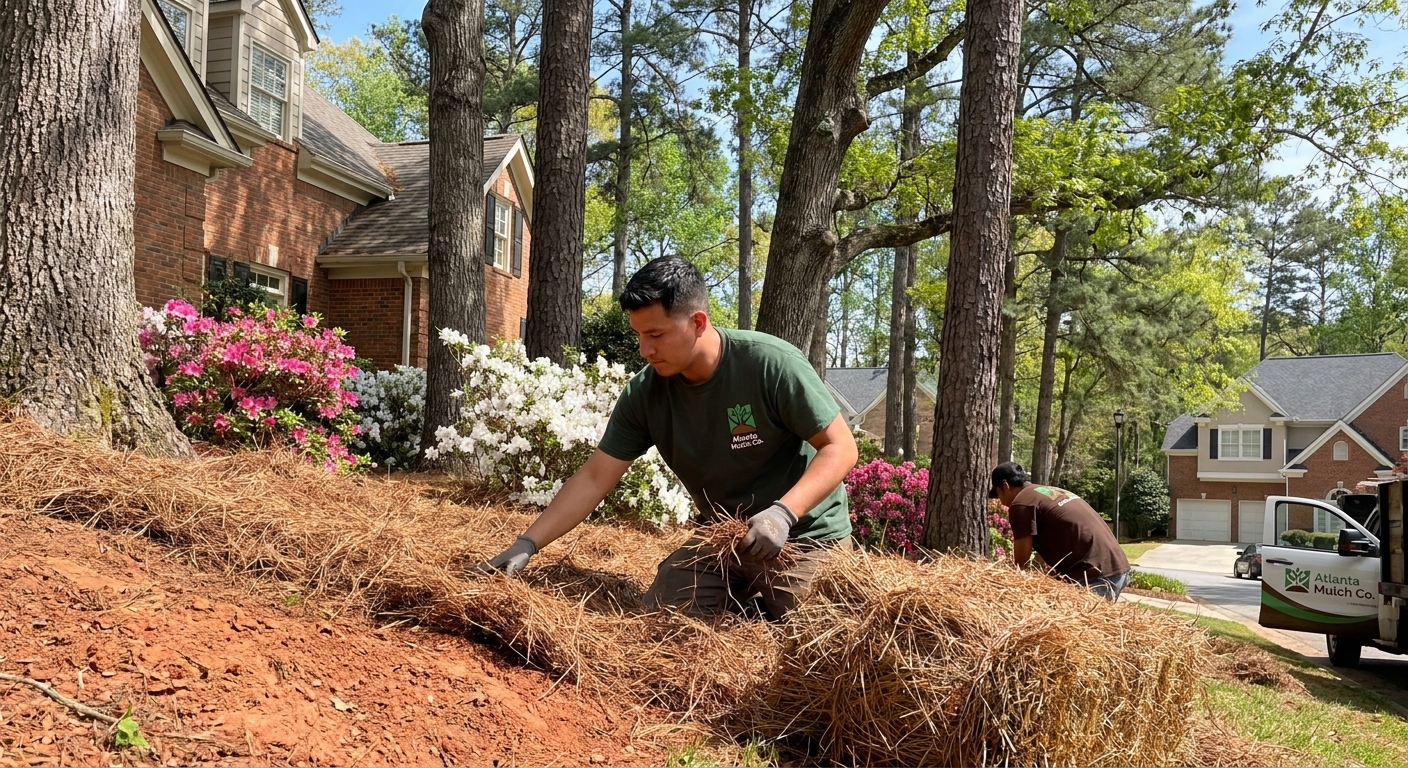
Pine straw's shorter functional life — typically 2 to 3 months of rich color — means timing matters less for it in an absolute sense, since you are refreshing it multiple times a year regardless. Dyed mulch, with its longer 10 to 14 month color life, benefits more from a well-timed spring application so the color holds through the peak-visibility growing season rather than fading right before it.
Signs your beds need mulch now, regardless of calendar
- Bare soil visible between plants where weeds are already germinating.
- Existing mulch compacted, moldy, or broken down to less than an inch of coverage.
- Recently planted shrubs or new landscape installs with no mulch protection yet.
- A property listing or event coming up where curb appeal needs to look sharp on a specific date.
Our take
Late spring is the best all-around window for most Atlanta properties, with early fall as a strong second option for cold-sensitive plantings. Beyond that, the honest answer is that a bed that needs mulch needs mulch — waiting for a theoretically perfect date is less important than not leaving bare, weed-prone soil exposed. See our mulch installation page for pricing whenever you are ready.