
Service · Atlanta, GA
Mulch Installation in Atlanta
Beds cleared, edged and mulched to the right depth, not dumped and raked thin. Natural pine bark or hardwood, installed so it actually holds up through a metro Atlanta storm season on real Georgia clay.
Mulch installation across metro Atlanta
Mulch does three jobs at once around a Georgia home: it holds moisture that Atlanta’s dense red clay tends to shed instead of absorb, it blocks weed germination by cutting off light, and it protects root zones from summer heat that reflects hard off driveways and brick. None of that works if it is dumped in a pile against the trunk of a shrub or raked out an inch thin over a bed that was never cleared. We clear, edge and spread to a real depth, and we tell you honestly when a bed needs weeding or a plant needs to come out before mulch goes down rather than burying the problem under fresh material.
Mulch types we install
Natural pine bark, in nugget or mini-nugget size, is the most common mulch we install in metro Atlanta. It holds its position on the sloped, clay-heavy lots common across the region better than shredded mulch, breaks down slowly, and gives beds a natural, chunky look. Mini nuggets work better in smaller beds and tighter plantings; standard nuggets look right in larger open beds and around trees.
Hardwood mulch, whether left natural or dyed black, brown or red, is a finer, shredded product that packs down into a denser mat than bark. That density is an advantage on flatter beds where you want a uniform, manicured look, and it is the base material for all of our dyed mulch installation work.
For acid-loving plantings like azaleas, camellias and rhododendrons — all common across older Atlanta neighborhoods — pine straw is often the better call than bark or hardwood, and it holds a slope better than either. If your beds need certified safety surfacing instead of a decorative material, see playground mulch installation.
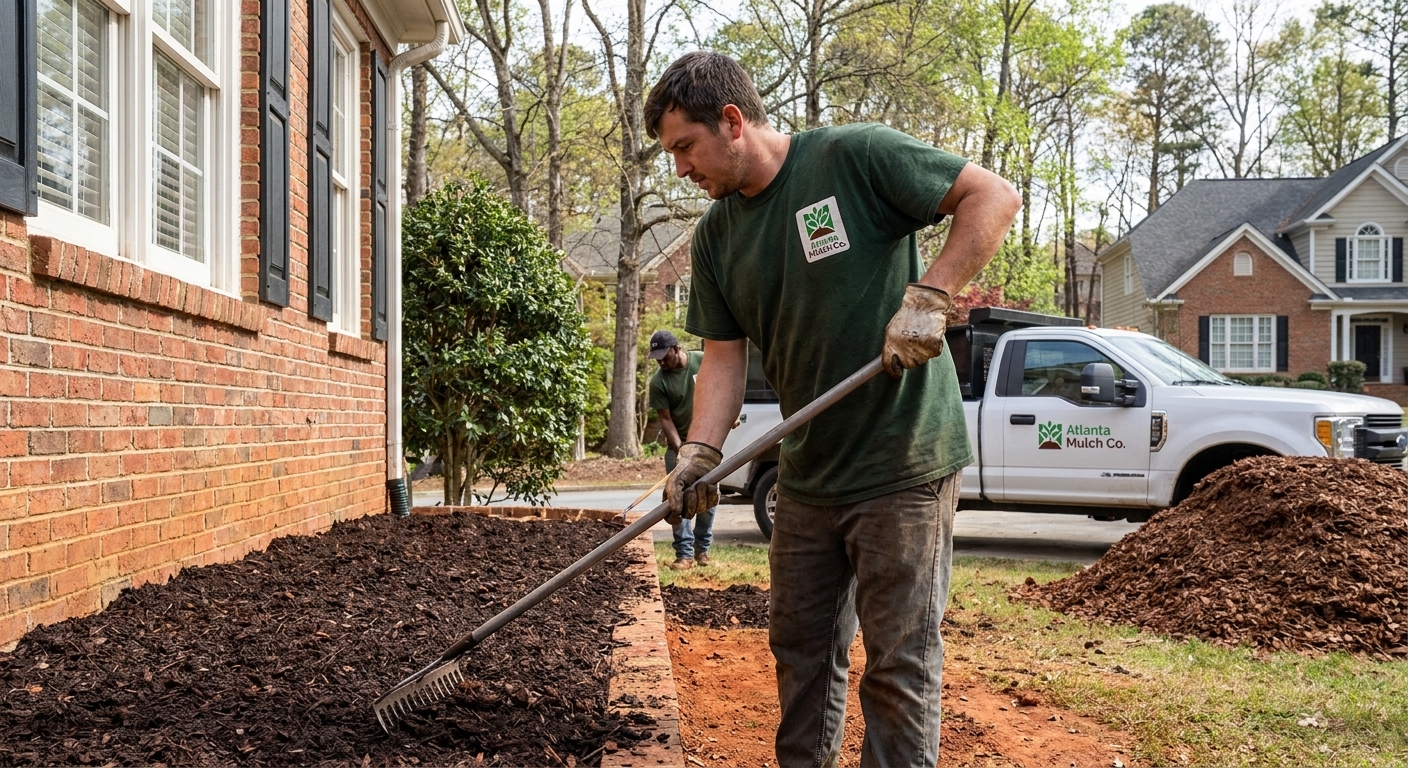
What a mulch install includes
- Bed clearing — dead leaves, old degraded mulch and weeds removed before new material goes down.
- Edge cutting — a clean spade or steel edge line so mulch stays in the bed and out of the lawn.
- Depth check — spread and leveled to 2 to 3 inches, not dumped in a pile and left uneven.
- Volcano-mulch correction — mulch pulled back from tree trunks and shrub crowns before fresh material is added.
- Full cleanup — blown-off walkways and driveways, bags and debris hauled away.
What mulch installation costs
Installed price runs by mulch type and bed condition. Natural pine bark nuggets installed run $55 to $75 per cubic yard. Dyed hardwood runs $65 to $95 — see dyed mulch installation for the color-by-color breakdown. Pine straw is priced per bale rather than by the yard, generally $8 to $12 per bale installed, with most residential beds needing 15 to 40 bales depending on size.
| Job | Typical range | What moves the price |
|---|---|---|
| Natural pine bark, installed | $55 – $75/cu yd | Bed size and depth |
| Natural hardwood, installed | $55 – $70/cu yd | Bed size and depth |
| Dyed black, brown or red mulch, installed | $65 – $95/cu yd | Bed size and dye grade |
| Pine straw, installed | $8 – $12/bale | Bale count and coverage |
| Old mulch removal | $30 – $50/cu yd | Volume and disposal distance |
| Bed edging, per linear foot | $3 – $8 | Method — see landscape bed edging |
Coverage math, so you know what you are paying for
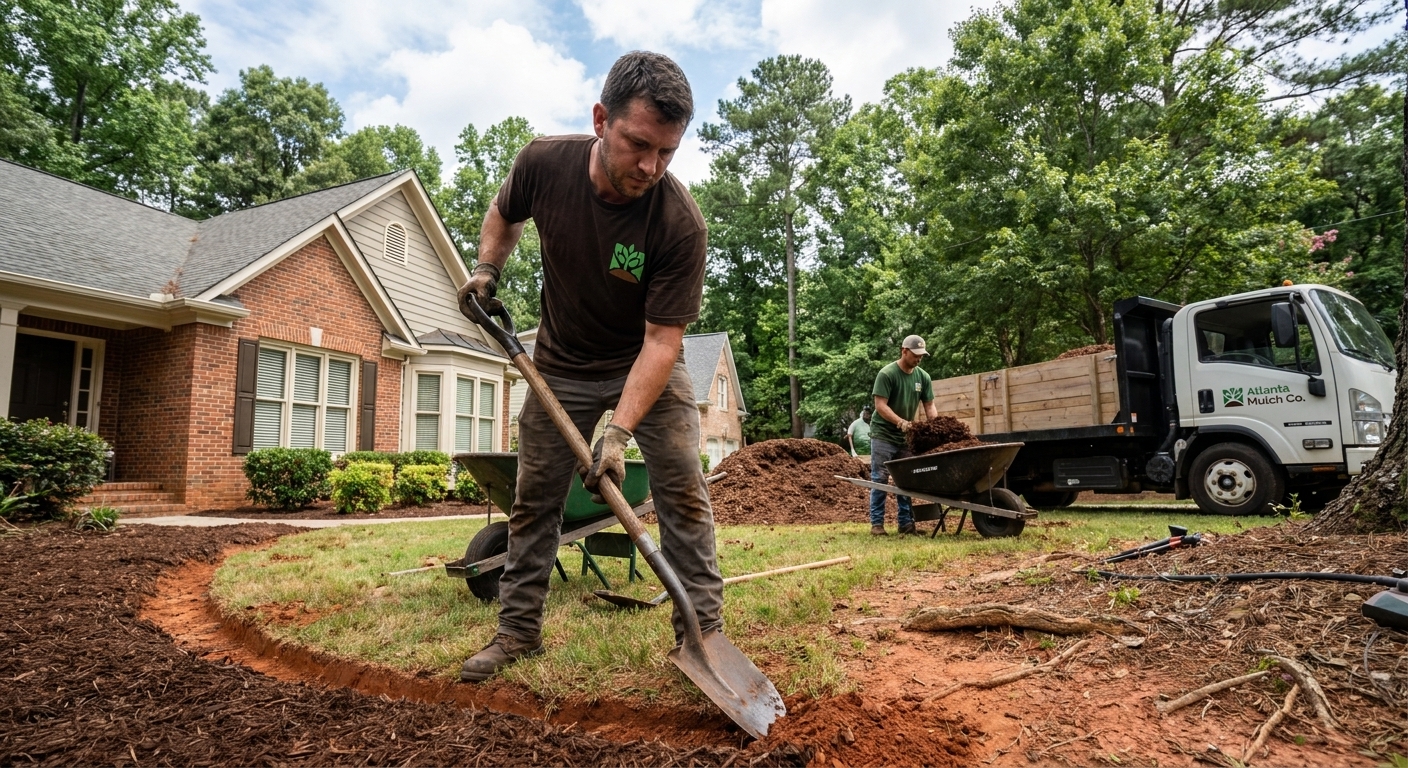
One cubic yard covers roughly 100 square feet at a 3-inch depth, or about 160 square feet at 2 inches. A typical foundation bed running the front of a house, say 200 to 300 square feet, needs 2 to 3 cubic yards at proper depth. Beds mulched thinner than 2 inches will not suppress weeds through a full growing season, and beds pushed past 4 inches can smother roots and hold too much moisture against stems — a real risk on Atlanta’s already slow-draining clay.
How often mulch needs refreshing
Natural pine bark holds its look and function for 12 to 18 months in Georgia before it has broken down enough to need topping off. Hardwood runs similar, though dyed material tends to fade a bit sooner in full sun — typically 10 to 14 months. Pine straw compresses and needs refreshing every 2 to 3 months if you want the color fresh, which is part of why it is priced lower per application.
Beds that need more than mulch
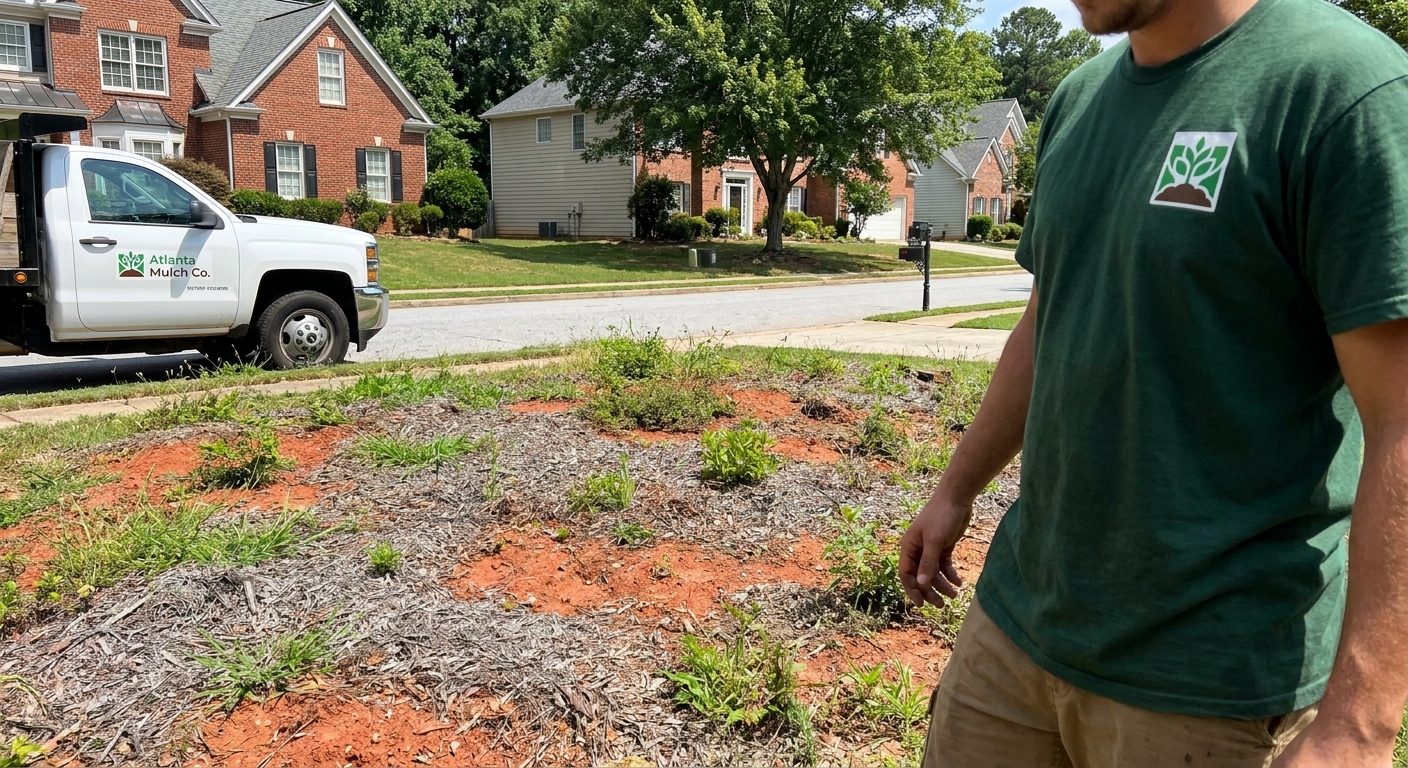
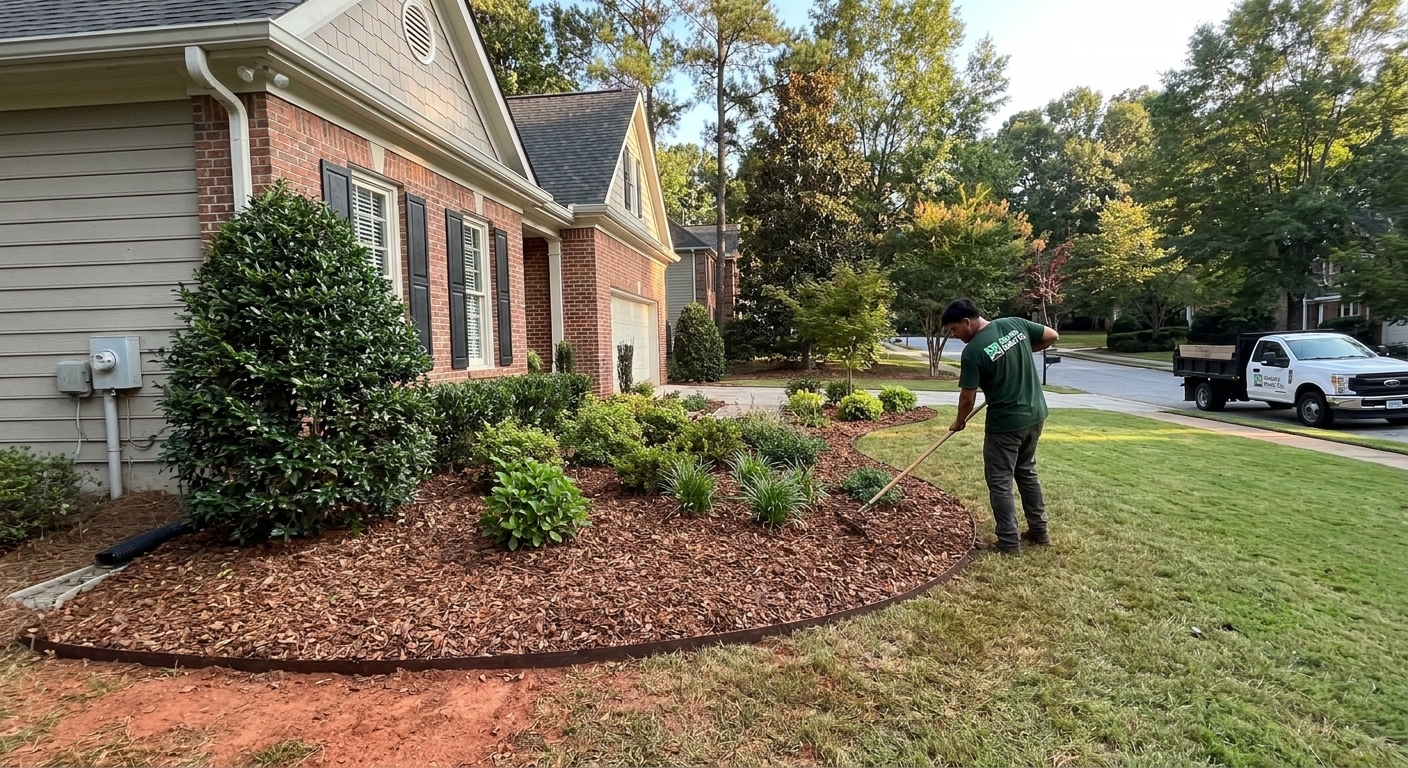
If a bed is more weeds than plant material, or the border has broken down and grass is creeping in on Georgia clay, mulch alone will not hold. We will flag that during the estimate and, where it makes sense, pair mulch installation with landscape bed edging and prep so the new mulch actually stays put instead of migrating into the lawn within a season.
Where we install mulch
We install mulch throughout metro Atlanta, including Decatur, Sandy Springs, Roswell, Alpharetta, Marietta, Smyrna, Dunwoody and Kennesaw. If you already have the labor to spread it yourself and just need material dropped, see bulk mulch delivery for pricing without installation.
Questions
Mulch Installation FAQs
Natural pine bark runs $55 to $75 per cubic yard installed, natural hardwood runs $55 to $70, and dyed black, brown or red mulch runs $65 to $95 because of the extra colorant process. Pine straw is priced per bale, typically $8 to $12 installed. A typical foundation bed refresh lands between $275 and $700 depending on size, mulch type and how much old mulch has to come out first.
2 to 3 inches for most beds. Thinner than that and weeds punch through within a season. Deeper than 4 inches can hold too much moisture against stems and roots and actually cause more harm than the weeds would, especially on Georgia’s slow-draining clay. We measure and level to the right depth rather than dumping and eyeballing it.
It is mulch piled up against a tree trunk or shrub crown in a cone shape, usually because it is faster to dump than spread flat. It traps moisture against bark, which invites rot, fungus and boring insects. We pull every bed back to a flat ring around trunks before adding fresh mulch, even on beds where a previous company left it piled that way.
Natural pine bark is the reliable all-around choice — it holds position and breaks down slowly on clay that drains slowly to begin with. Dyed hardwood gives the most uniform, finished look for beds near the front of the house. Pine straw suits acid-loving plants like azaleas but needs refreshing more often.
One cubic yard covers about 100 square feet at 3 inches deep, or 160 square feet at 2 inches. We measure your beds during the estimate and calculate exact yardage so you are not over-ordering or coming up short mid-job.
When it has broken down into compacted muck or gone moldy, yes, that gets pulled and hauled off first, generally $30 to $50 per cubic yard removed. If the existing layer is still in reasonable shape we will top-dress over it instead and save you that cost.
Pine bark and natural hardwood hold up 12 to 18 months before needing a full refresh. Dyed mulch fades a bit sooner in full sun, typically 10 to 14 months. Pine straw compresses faster and typically needs topping off every 2 to 3 months.
Yes, and we recommend it if your beds are losing their border to grass creep. See landscape bed edging and prep for pricing. Doing both in one visit means one mobilization instead of two, and the new mulch actually stays inside the line instead of migrating into the lawn.
Depends on the bed. Around a front entrance or beds close to the house where a uniform, finished look matters, yes. For beds further from view where you mainly want moisture retention and weed suppression, natural pine bark does the job for less.
Related
Other mulch work we do
Get a price for your mulch installation
Free on-site estimate with a flat written price before we start. Call or send photos and we will tell you what it costs.
Mon–Sat 7:00am–7:00pm · Licensed & insured · Serving Atlanta and metro Atlanta