
Service · Atlanta, GA
Landscape Bed Edging & Prep in Atlanta
Grading, weed clearing and a clean edge line before mulch ever goes down. This is the work every good mulch job depends on — skip it and even the best material migrates and fails within a season.
Landscape bed edging & prep across metro Atlanta
Mulch fails at the edge before it fails anywhere else. A bed with no clean border loses mulch into the lawn every time it rains or gets mowed near, and grass roots creep the other direction into the bed within a season. Bed prep and edging is the unglamorous work that decides whether a mulch job still looks sharp six months later or has already blurred back into the yard — and on Atlanta’s dense clay, a poorly cut edge breaks down even faster than it would on sandier soil.
Edge types we install
Spade-cut (natural) edges are the traditional trench-style border cut with a spade or edging tool, creating a shallow V-shaped channel between lawn and bed. They cost the least and look the most natural, but need to be re-cut once or twice a year as grass grows back into the channel.
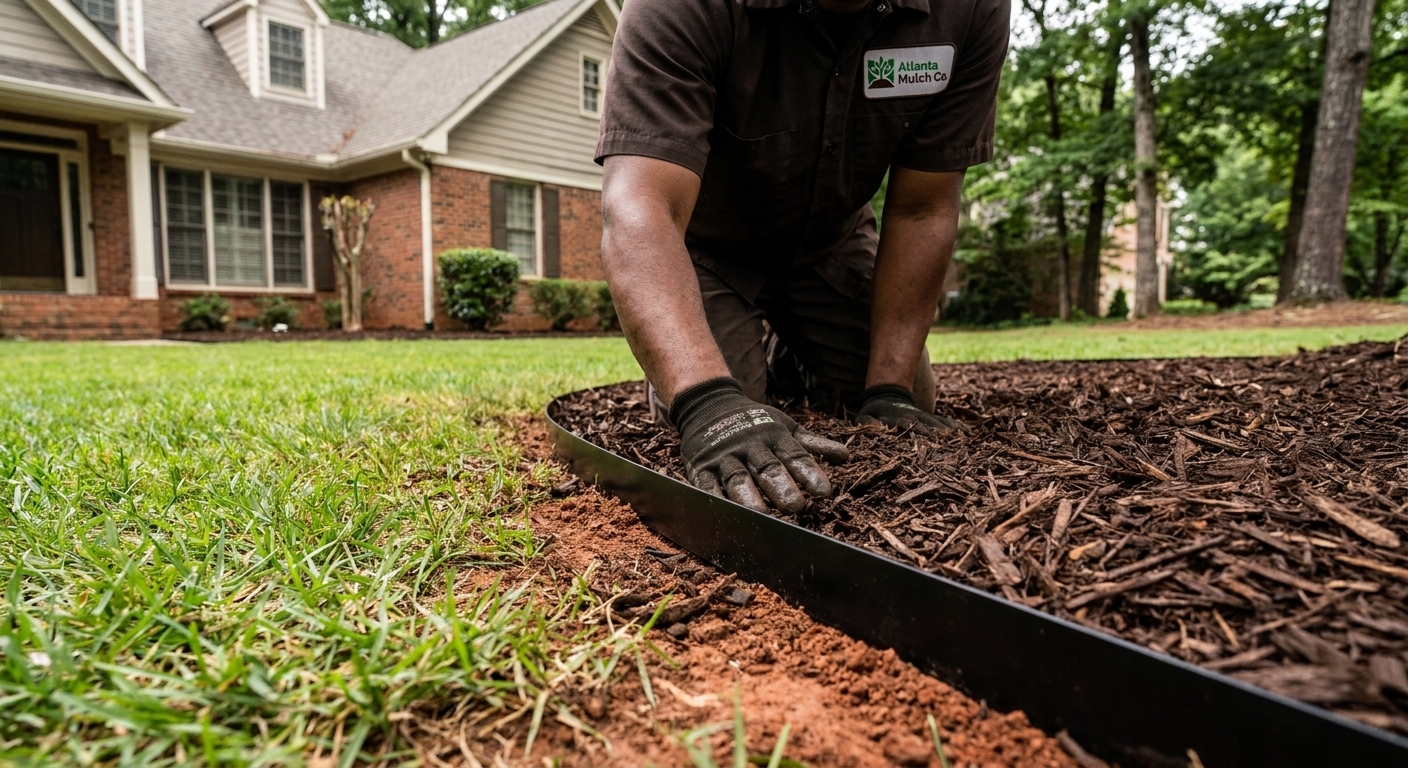
Steel edging is a thin, rigid metal strip installed at the bed border, invisible once mulch covers the top edge. It holds a perfectly straight or curved line for years with essentially no maintenance and is the standard choice for beds where a crisp, permanent line matters — front entrances, HOA common areas, and any bed you do not want to re-cut every spring.
Trench edging is a deeper, wider version of a spade-cut edge, sometimes lined with landscape fabric, used where grass is particularly aggressive or a bed sits directly against a heavily irrigated lawn zone.
What bed prep includes
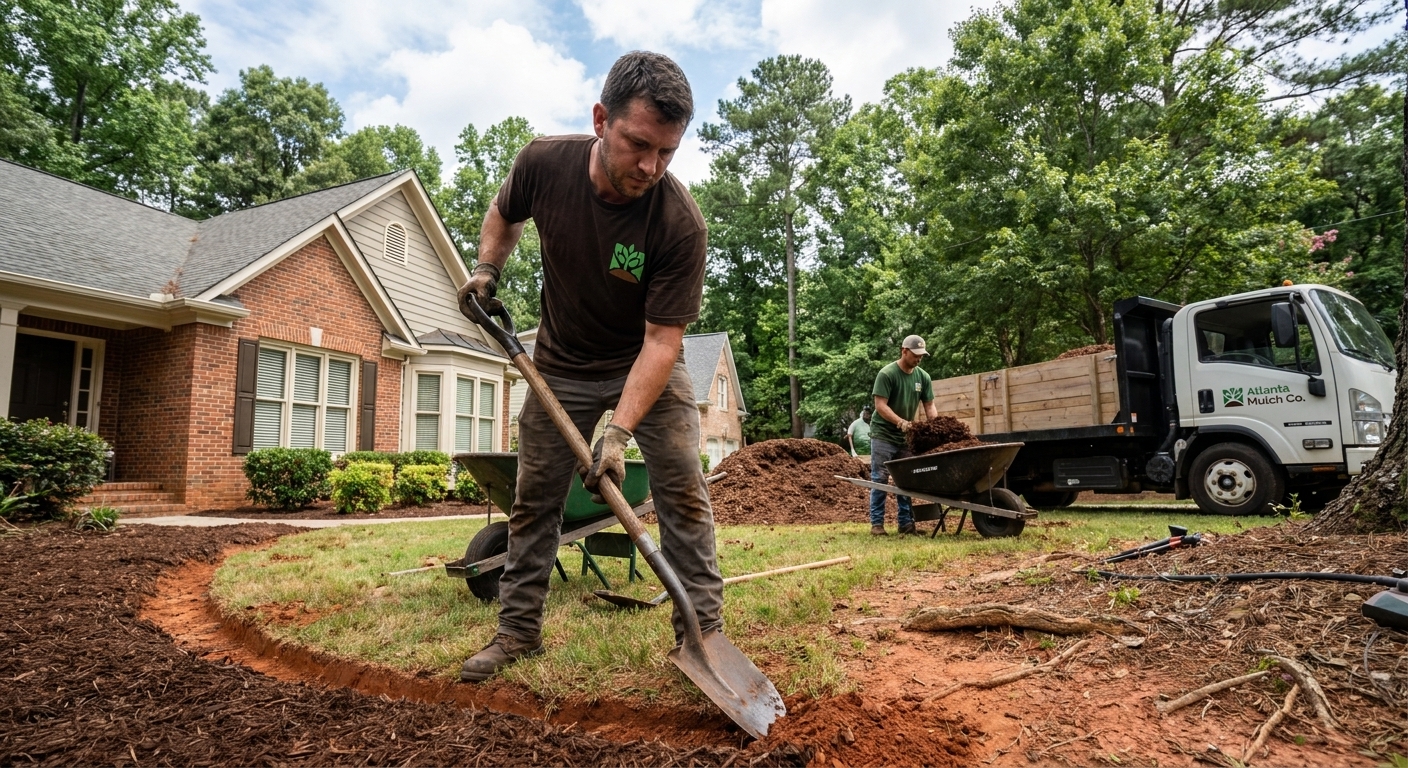
- Weed and debris clearing — existing growth pulled or killed before mulch goes down over it.
- Grading — low spots that hold water against a foundation or plant crown corrected.
- Edge cutting or installation — spade, steel or trench, matched to the bed and your maintenance preference.
- Soil check — compacted or waterlogged soil flagged before mulch is added on top of a problem.
- Debris haul-off — cleared material removed from the property, not left in a pile.
What edging and prep costs
| Job | Typical range | What moves the price |
|---|---|---|
| Spade-cut edge, per linear foot | $3 – $5 | Bed perimeter length and grass density |
| Steel edging installed, per linear foot | $5 – $8 | Material cost and curve complexity |
| Trench edging, per linear foot | $4 – $7 | Depth and fabric lining if used |
| Bed prep & leveling, per sq ft | $0.35 – $0.75 | Weed density, grading needed |
| Combined with mulch install | Bundled discount | One mobilization instead of two |
Why grading matters as much as the edge
A clean edge does not help if the bed itself slopes the wrong way and channels water against a foundation or plant crown. We check grading on every bed prep job, not just the border, since Georgia clay drains slowly enough that a poorly graded bed can stay saturated for days after a storm — long enough to rot root crowns and turn fresh mulch into a soggy mat.
How often edges need maintenance
Spade-cut edges need re-cutting once or twice a year as grass grows back into the channel. Steel edging needs essentially no maintenance beyond an occasional check that it has not been disturbed by mowing equipment. Trench edges fall in between, typically needing attention once a year on aggressive turf.
Where we do bed prep and edging
We handle landscape bed edging and prep throughout metro Atlanta, including Atlanta, Brookhaven, Vinings, Smyrna and Peachtree Corners. Once beds are prepped, see mulch installation or dyed mulch installation for material options.
Questions
Bed Edging & Prep FAQs
For most residential beds, steel edging offers the best combination of a clean, permanent line and low maintenance. Spade-cut edging costs less upfront but needs re-cutting once or twice a year as grass grows back in. We will recommend one based on your maintenance preference and budget, not just the more expensive option.
Spade-cut edging runs $3 to $5 per linear foot, steel edging runs $5 to $8, and trench edging runs $4 to $7. A typical 80 to 100 linear foot front-bed perimeter runs roughly $250 to $700 depending on the edge type chosen.
Not always, but we check every bed for edge condition during a mulch estimate and will tell you honestly if the border will not hold new mulch without repair first. Many mulch jobs proceed without new edging if the existing border is still solid.
Typically once or twice a year, since grass regrows into the channel over a growing season. Steel edging avoids this maintenance almost entirely, which is why many homeowners upgrade to it after a few seasons of re-cutting.
Almost always a missing or broken-down bed edge. Without a physical barrier or cut line, mulch spreads outward every time it rains or gets disturbed by a mower. Fixing the edge, not just adding more mulch, solves this permanently.
Yes, clearing and killing existing weed growth is part of standard bed prep before mulch goes down. Mulch spread over live weeds only suppresses them for a few weeks before they push back through.
Edging alone does not fix drainage — that requires grading, which we check and address as part of full bed prep, not the edge line itself. We will flag a real grading problem separately from a simple edge repair.
Both. Steel edging in particular holds curves cleanly since it is a flexible strip material, and most residential bed shapes are curved rather than straight anyway. Complex curves take slightly longer to install, which is reflected in the linear-foot price.
Yes, proportionally it often matters more on a small property, where a blurred bed edge is more visible and mulch migration onto a small lawn area is more noticeable. Cost scales with linear footage, so small beds cost proportionally less overall.
Related
Other mulch work we do
Get your beds prepped and edged right
Free on-site look at your bed edges and drainage. Flat written price before we start.
Mon–Sat 7:00am–7:00pm · Licensed & insured · Serving Atlanta and metro Atlanta