
What a mulch volcano actually is
A mulch volcano is mulch piled up in a cone against a tree trunk or shrub crown, often several inches to a foot deep right where it touches the bark. It happens because piling mulch in a mound is faster than spreading it flat and level — a crew or a landscaping service on a tight schedule dumps a load and shapes it into a neat-looking cone rather than taking the extra time to pull it back and spread it properly across the full bed.
Why it damages trees and shrubs
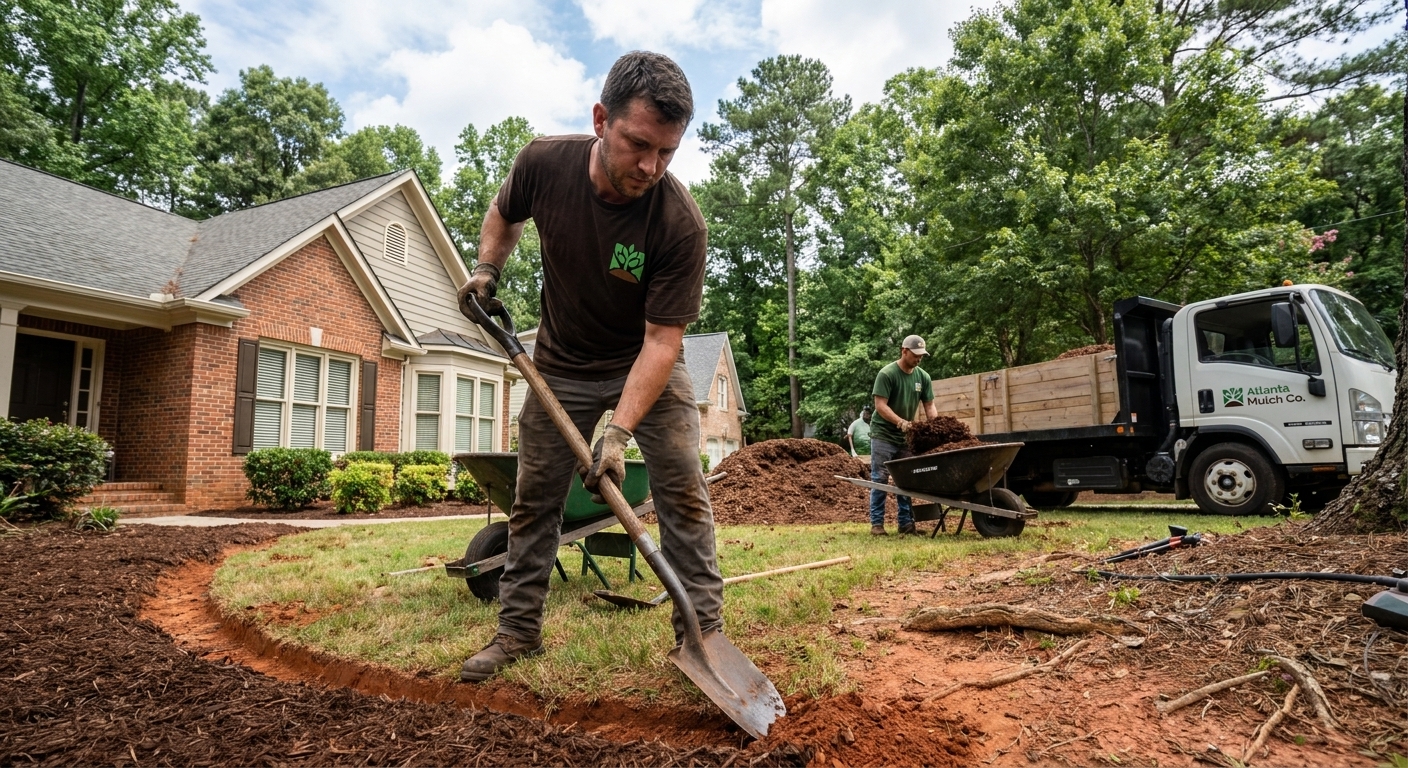
Bark near the base of a tree is not designed to stay constantly wet the way roots are. Piled mulch traps moisture directly against the trunk, which softens bark, invites fungal and bacterial rot, and creates an inviting, moist environment for boring insects and rodents that would otherwise leave healthy bark alone. Over months and years, this slowly girdles the tree at its base — the exact spot where structural damage does the most harm.
It also encourages roots to grow up into the mulch pile itself rather than down and outward into the soil, since the mulch offers moisture and looser material than compacted Georgia clay below. Trees with roots trained this way become less stable and more drought-prone over time, since shallow, mulch-bound roots dry out faster than a properly developed root system.
How to spot it on your own property
- Mulch touching or covering the trunk flare (the point where the trunk widens into the roots).
- A visibly cone- or dome-shaped mound rather than a flat, even layer.
- Mulch depth greater than 4 inches anywhere close to a trunk or shrub crown.
- Bark that looks unusually dark, soft, or is showing fungal growth right at the mulch line.
The correct way to mulch around a tree
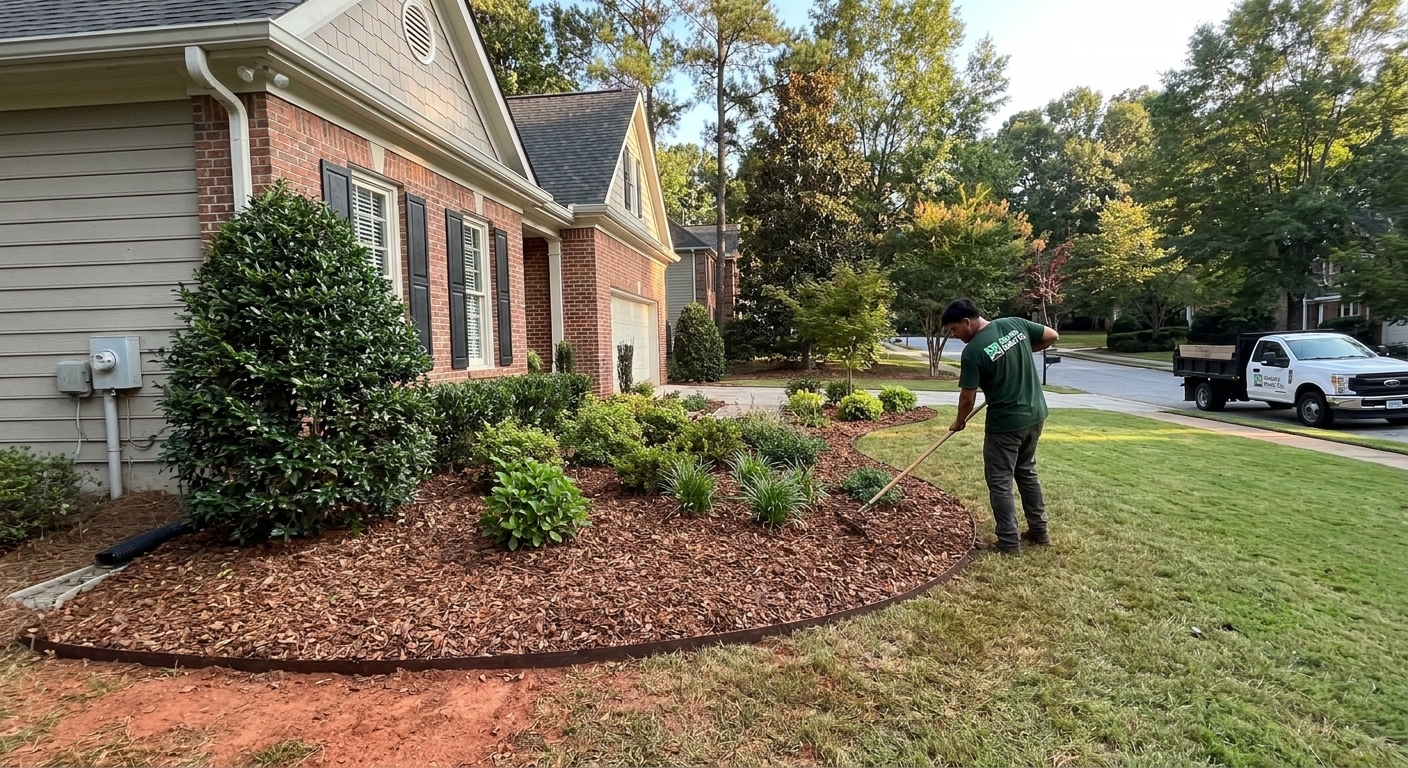
Mulch should form a flat, donut-shaped ring around a tree, 2 to 3 inches deep, starting a few inches away from the trunk flare rather than touching it — leave the base of the trunk visible and dry. The ring can extend out to the edge of the tree's canopy drip line for maximum root-zone benefit, but even a modest 3 to 4 foot diameter ring done correctly is far better than a volcano piled directly against the bark.
Fixing an existing mulch volcano
If a tree already has years of piled mulch against it, the fix is straightforward: pull the excess material back by hand to expose the trunk flare, redistribute it into a flat ring at proper depth, and inspect the bark underneath for any soft spots, discoloration or insect activity while it is exposed. This is something we check and correct as part of every mulch installation job, even when a homeowner did not specifically ask for it — we will not add fresh mulch on top of an existing volcano without fixing it first.
The same rule applies to shrubs
Shrub crowns — where the stems meet the root ball — are just as vulnerable as tree trunks. The same flat, pulled-back approach applies: mulch around the shrub, not on top of or against its base stems.
See our mulch installation page for pricing on a proper install, or mulch removal and refresh if your beds need a full reset before doing it right.